We Finally Scanned the "Moderate Drinker" Brain, and the Missing 11% Should Terrify You
The wellness industry spent the last twenty years trying to convince you that a nightly glass of Pinot Noir protects your cardiovascular system. Marketers cited resveratrol. They pointed to the Mediterranean diet. They completely ignored what the ethanol was actually doing to the physical wiring of your prefrontal cortex. A January 2026 neuroimaging study published in the Journal of Clinical Investigation just stripped away that plausible deniability using a radioactive tracer that literally illuminates your synapses.
Illuminating Synapses with Radioactive Tracers
You cannot just put someone in a standard MRI and count their brain connections because the resolution is absolute garbage for that kind of microscopic accounting. Researchers had to inject 32 people diagnosed with alcohol use disorder and 29 healthy controls with a highly specialized radiotracer called [11C]UCB-J. This compound hunts down a specific synaptic vesicle protein named SV2A.
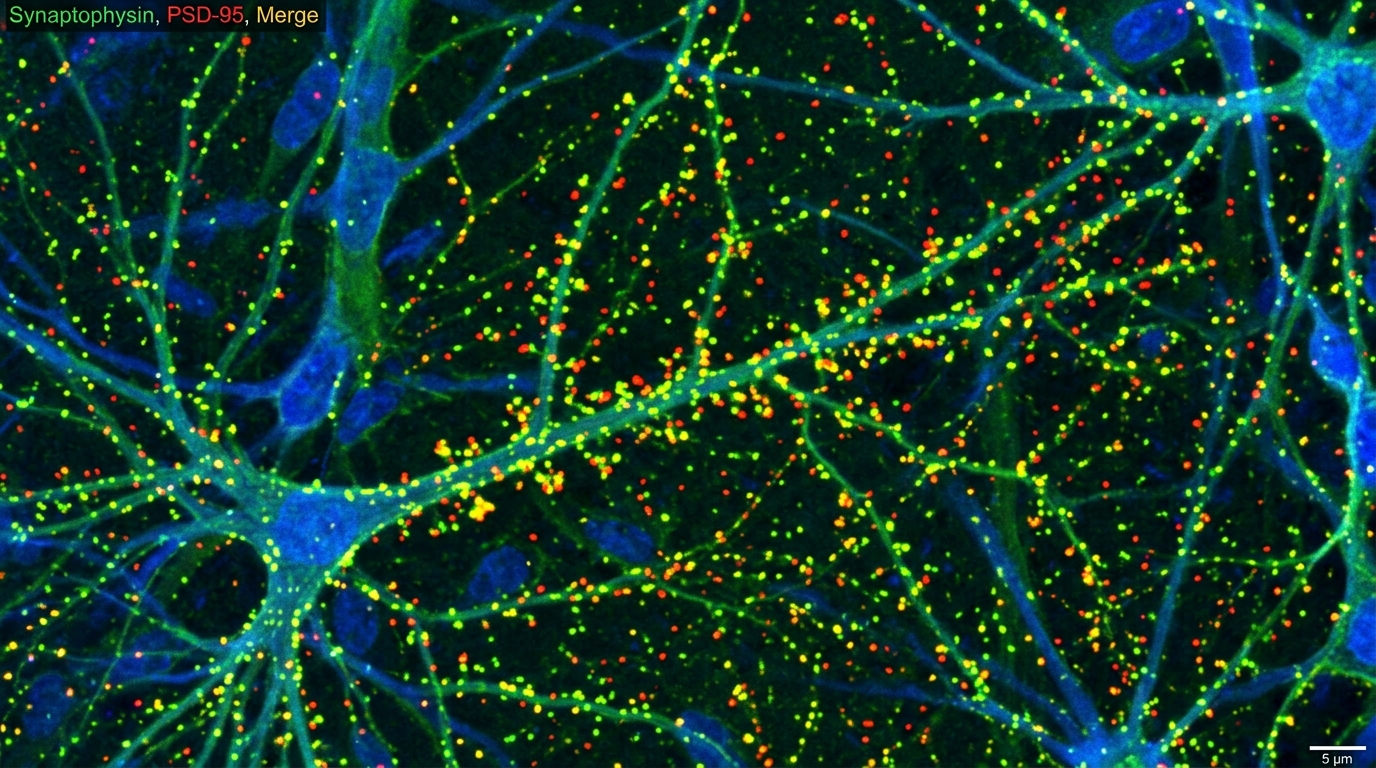
When the PET scanner spins up, the SV2A proteins light up on the monitor, giving the radiologists a high-definition map of exactly how many physical synapses exist inside a living human skull. The resulting images look like a heat map of a city at night: the drinkers' maps were noticeably darker.
Key findings from the scan:
- 11% reduction in synaptic density across the frontal cortex
- Nearly identical deficits in the striatum and hippocampus
- Frontal cortex handles executive function and impulse control
- Hippocampus damage dismantles the hardware required to store new information
Bingeing vs Sipping: The Volume Problem
Here is where the data gets deeply uncomfortable for the casual weekend warrior who insists they only drink on special occasions. The researchers did not just compare severe, end-stage addicts to lifelong teetotalers. The study cohort included people with mild and moderate diagnoses who function perfectly well in society.
And the structural deficit scaled perfectly with their behavior. The metric that predicted the most severe synaptic loss was not necessarily how many years the person had been drinking, but the sheer volume of drinks consumed per drinking day. Bingeing on a Friday night deletes more structural connections than sipping a single beer every evening. The brain simply cannot repair the SV2A proteins fast enough when you flood the central nervous system with five or six drinks in a three-hour window.
The Disconnect Between Damage and Performance
Strangely, the cognitive tests told a slightly messier story than the brain scans. The drinking group performed significantly worse on standard executive function assessments compared to the control group. Yet, when the statisticians ran the regression models, the lower test scores did not perfectly map onto the specific regions with the lowest SV2A binding potential.
The human brain is remarkably good at routing signals around damaged tissue until it simply cannot anymore. You might pass a standard memory quiz just fine while your hippocampus operates at an 11 percent structural deficit, right up until the compensatory mechanisms finally collapse under the weight of age or stress.
Why high-functioning professionals miss the warning signs:
- You feel sharp at work and remember your passwords
- You navigate complex social situations without stumbling
- Underneath the functional veneer, the physical scaffolding is quietly dissolving
- Compensatory mechanisms collapse under age or stress
The Sober Curious Movement's Hidden Motivation
This disconnect between structural damage and immediate cognitive failure explains why high-functioning professionals rarely notice the decline until it is far too late to reverse. The January 2026 paper concludes that synaptic restoration must now become a legitimate pharmacological target for addiction treatment. If the hardware is physically missing, no amount of mindfulness meditation or brain-training apps will bring it back.
The sober curious movement gained massive traction over the last few years precisely because people started noticing this subtle cognitive dulling. They realized that the afternoon anxiety and the inability to focus on deep work were not just psychological quirks; they were the direct result of chemically eroding their own neural pathways.
The only proven intervention for rebuilding those lost connections is stopping the chemical assault entirely and waiting for the biology to slowly rebuild itself over months of abstinence.
Pouring That Second Glass
Pouring that second glass of wine tonight means actively choosing to dissolve a little more of your frontal cortex. The scan proves it.
Reference
1. Higher drinking frequency corresponds to lower synaptic density in... Journal of Clinical Investigation / PubMed. 2026 Jan 13. PMID: 41528802. pubmed.ncbi.nlm.nih.gov/41528802